Is a recession impacting your interior design business? Or maybe you’re worried about when it might hit you? Perhaps you’re even wondering if it’s safer to jump back into a 9-to-5 while those jobs are still available.
Economic downturns can be scary for any small business owner, and interior designers are no different. When uncertainty strikes, clients often delay projects, cut back on budgets, or try to tackle things themselves. But a recession doesn’t have to mean disaster.
Yes, the interior design industry might be facing some challenges, but there’s no reason to lose hope. With the right strategies in place, you can not only survive the tough times but also position your home decor business for growth.
In this blog post, we will look at how to promote your design business during a recession and how to set it up to thrive once the economy starts to recover.
Disclaimer: This blog post may contain affiliate links and we may earn a small commission when you click on the links or purchase paid products at no additional cost to you. We only recommend products and software we truly believe to be helpful for your business.
When Things Start to Slow Down in Your Home Decor Business
Every recession is different, but some things tend to stay the same. Consumer confidence drops, people take longer to make spending decisions, and budgets shrink. Or, in some cases, get put on hold altogether.
For interior designers, this often means it gets even harder to attract new clients. You might notice fewer inquiries, initial consults that don’t turn into full projects, or more people pausing their renovation plans. Some may turn to DIY solutions or scale back because they’re unsure about the future. Or perhaps they feel they need more budget-friendly alternatives to hiring an interior designer.
If you’re just starting out, getting your interior design business off the ground can feel especially tough in this climate.
And it’s not just you — adjacent industries, like real estate or hospitality, can also take a hit. Fewer home sales mean fewer staging opportunities, and businesses might hold off on renovating offices or redesigning retail spaces.
All of this creates a cycle where everyone feels the impact. People spend less, which makes it harder to break the cycle, leaving you feeling stuck and uncertain about the future.
But here’s the thing: you don’t have to sit back and wait for the economy to bounce back. There are things you can do right now to stay visible and relevant. Some parts of your business, like marketing, need even more attention if you want to keep moving forward.


The Importance of Marketing and Promotion During Recessions
A common reaction during a recession is to cut back on marketing because it seems like an easy way to save money. But doing that can actually hurt your business in the long run.
When you pull back on promotion, you reduce your visibility right when people need reminders that your business is still here, still active, and still relevant. It becomes harder for potential clients to find you. Also, you risk losing out to another interior designer who is still showing up and investing in their brand.
Plus, when others scale back their marketing, it creates an opportunity for you to stand out, often at a lower cost.
On advertising platforms like Google Ads or Facebook, ad costs are based on demand. It’s an auction system, so when fewer businesses are bidding, the price per click drops.
If you stay active, you’re not just staying visible—you’re getting more value for your investment while your competitors sit on the sidelines.


What to Do with Your Home Decor Business When You Can’t Increase Your Marketing Budget
If you can’t afford to increase your marketing budget, at the very least, keep going. Stay visible.
That doesn’t mean you shouldn’t cut costs where it makes sense. There are probably expenses you can trim that will actually strengthen your business. Maybe there’s software you no longer use or subscriptions that have free alternatives. Or perhaps your studio lease is tough to justify when you could work from home and meet clients at their place.
But just like you wouldn’t cut essential tools or resources needed to run your business, you shouldn’t cut the thing that helps you grow it. Marketing is how people find you, trust you, and eventually hire you.
If you really do need to scale back your marketing spend, focus on free or low-cost options (like social media) to make sure your brand stays in front of people.
From your client’s perspective, tough times usually mean longer decision-making as people become much more cautious with their spending. They take longer to decide and do more research, especially when it comes to hiring a service-based business like an interior designer.
This is exactly why consistent marketing matters. It’s not just about likes or followers anymore. Now more than ever, it’s about staying top of mind, building trust, and showing potential clients that you’re still here.


Even if most of your followers aren’t ready to hire you right away, that’s okay. You’re introducing them to your business, keeping them engaged, and building relationships for the future.
Recession or not, people still want homes that feel beautiful, functional, and comforting. They may just need more time to make that hiring decision, or they might be looking for more affordable packages that fit their current budget.
And remember: recessions don’t last forever, even if it feels like they might. When the economy bounces back, the effort you put in now can lead to stronger client loyalty and more repeat business down the road.
So, don’t stop with marketing when things get tough. Now’s the time to get focused, stay visible, and double down on your promotion efforts.
Next, let’s look at specific things you can do during a recession to help your business not just survive but come out even stronger once the economy recovers.
Focus on Networking — Even More Than Usual
Interior design is an industry built on personal connections, and during a downturn, those connections matter even more.
Networking and collaborating with other businesses within your local community can help you stay visible without spending anything on ads.
For example, if your ideal client is a high-end homeowner, reach out to builders who specialize in that market. Explain how your design expertise can add value to their clients’ projects and start building relationships that could lead to referrals in the future.
Even though a recession might impact various industries differently, the high-end market tends to be more resilient. This can mean that those homeowners may still go ahead with their projects.
But no matter who your ideal client is, networking in your community can help you reach new audiences and expand your presence.
You might connect with local businesses like tile or flooring retailers, paint stores, or introduce yourself to nearby architects. Think of it as planting seeds for future referrals, not just trying to land immediate clients. It takes time to build trust with vendors and builders, but the effort now will pay off later.
You can also join local building associations as a vendor partner or get involved with a local business chapter. Community events are another great opportunity to get your name out there. Donating a consultation to a charity auction or fundraiser is a meaningful way to give back while getting in front of potential clients.
And if in-person networking isn’t your thing, start by reaching out via email or direct message. Just keep in mind that face-to-face interactions tend to leave a stronger impression, so can be more effective.


Reconnect with Past Clients
There are some great reasons to focus on your existing clients instead of putting all your energy into finding new ones.
First, they already know your work and trust your process. Plus, you know how to reach them, which makes reconnecting much easier. If they had a positive experience working with you before, they’re more likely to refer your services to others. Or even come back to you themselves when they need help again.
When it comes to lead generation, it usually costs less to get a repeat customer than to convert a brand-new lead because of the trust and relationship you’ve already built.
So what does this look like in practice? You could reach out with a personal note, simply letting them know how much you enjoyed working with them. No sales pitch. Just a quick, thoughtful email or message asking how they’re enjoying their space.
It’s a small gesture, but it can open the door to more conversations about their current needs or those of people they know. And while you’re at it, you can ask for a testimonial to use on your website or social media.
And if you really want to make an impression, take it a step further. For example, send a handwritten note around the holidays. Christmas, Easter, the Fourth of July, or even just a “happy spring” card are all great occasions.
A personal, thoughtful touch like that goes a long way toward keeping your business top of mind.


Build Up Your Social Media Knowledge
If things have slowed down and you’ve got some extra time, it could be the perfect moment to work on your social media skills. This is especially true in areas you haven’t had a chance to focus on before. Maybe it’s learning how to create Instagram Reels or setting up an automated DM sequence to grow your newsletter subscribers.
Even if your project pipeline has gone quiet, you can still batch evergreen content and schedule it in advance. That way, when business starts to pick up again, your social media presence will keep working for you in the background, attracting new followers to your profile, even when you’re busy with projects and can’t post regularly.
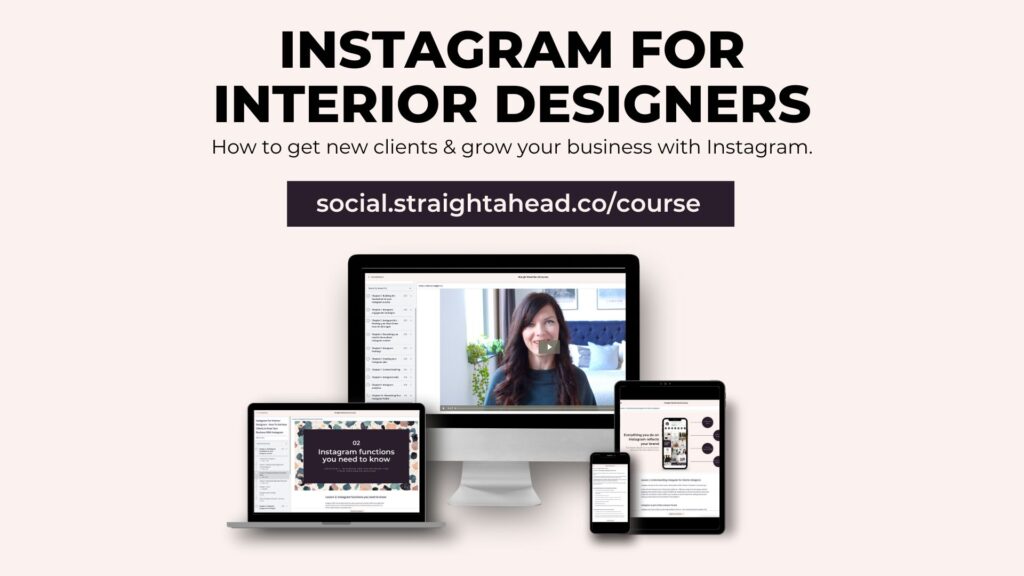
If Instagram is your main platform, check out our Instagram course for interior designers. It covers everything from the basics to advanced strategies that help you build a strong profile that attracts potential clients and helps you grow your business, even during slow seasons.
Consider Creating a Budget-Friendly Digital Product
You might think digital products are just for virtual designers or influencers, but that’s definitely not the case!
If you have knowledge or expertise in something people want to learn, you can turn it into a digital product.
Digital products are usually more affordable than hiring you for a full-service design project. That makes them a great fit for clients with tighter budgets during a recession. Plus, they’re easier to scale than in-person services.
For interior designers, a digital product could be a mood board template, a recorded video seminar on a design topic, or even a short course on how to style a space.
Sure, these products might bring in less income than your full-service offerings. But they can still give your bottom line a boost. And just as importantly, they can serve as a foot in the door for future clients who might come back with bigger projects once the economy improves.
You can also take a look at your existing services and adapt them into new, more affordable digital formats.


For example, you could offer a two-hour online intensive where you help a client refresh a single room. It can be priced competitively, provide real value, and allow you to expand your reach beyond your local area. Plus, doing it online means you’re no longer limited to local clients — you can work with people anywhere.
And this approach doesn’t have to be limited to digital. You can do the same with your in-person packages by breaking down your full-service offerings into smaller, bite-sized options.
Consider offering a “Designer for a Day” package. There, you can spend a few focused hours with a client helping pull together a scheme or consult on a layout, rather than managing a full project.
If they have a great experience, they’re more likely to come back or refer you to their friends.
Tackle the Small Marketing Tasks You’ve Been Putting Off
Marketing is never really done. There’s always something to test, update, or improve. While some of these tasks might not feel exciting or bring in new clients right away, they pay off over time by making your business look more polished and professional.
Not being swamped by project timelines is a great time to finally tackle marketing tasks that have been lingering on your to-do list.
You probably already have your own list, but here are a few ideas to get you started.


Join Platforms Like Nextdoor or Thumbtack, and Make Sure Your Google Business Profile Is Up to Date
Are you focused exclusively on local clients? Then platforms like Nextdoor, Thumbtack, and your Google Business Profile can be particularly helpful. These platforms are often the first place homeowners turn when they’re looking for someone nearby to help with a project. And that is especially the case when they want someone trusted and easy to contact.
If you’ve been putting them off because you haven’t needed them in the past, it’s time to revisit that decision. When fewer people are actively hiring, showing up in more places increases your chances of getting noticed. Plus, many of these platforms are free or low-cost, making them ideal when you’re trying to market on a budget.
Refresh Your Marketing Materials and Review Your Online Presence
If you don’t have a website yet, now is the perfect time to get one up and running. Your website is often the first impression potential clients have of your business. To make the best impression, it needs to look professional and easy to navigate.
If you already have a site, take some time to give it a thorough review. Add testimonials from happy clients and update your project gallery with recent work. Make sure your About page clearly tells your story: who you are, and how you help your clients. When budgets are tight, people become more cautious about who they hire, and trust is everything. Your website should make it easy for visitors to feel confident that you’re the right designer for them.
Don’t forget to check that all your contact details are up to date, and make sure your site loads quickly and works well on mobile phones. A slow or clunky website can turn visitors away faster than you might expect.
Beyond your website, take a look at your other marketing materials too. Refresh your brochures, business cards, and any downloadable PDFs to reflect your latest work and messaging. Consistency across marketing collateral helps reinforce trust and credibility.


Optimize Your Website and Blog for Google (and Other Search Engines)
While you’re updating your website, optimize your blog posts and pages so they can rank higher in Google searches. Use relevant keywords that your potential clients might be typing in when looking for interior design services in your area.
If you have a blog, go through your posts and make sure they include relevant keywords and phrases. Next, update titles, meta descriptions, and image alt text. Make sure your content is clear, helpful, and easy to read. Small changes can make a big difference over time.
If you haven’t started blogging yet, this is a great time to give it a shot. It’s one of the best ways to improve your SEO, build authority in your niche, and keep your website active. Not sure where to begin? Check out our post on blogging for interior designers for how to get started.
Make Your Project Photos Do More Work for You
You’ve already done the hard part – creating beautiful spaces and getting them photographed. Now it’s time to make those photos do some extra work by repurposing them in a smart way. Pin your best photos to relevant Pinterest boards to reach new audiences and drive traffic to your website.
Pinterest is one of the best social media platforms for interior designers. People often go there looking for inspiration and ideas, including for home decor projects. This means your work can get in front of potential clients who are actively dreaming about their next project.
A popular Pinterest graphic can drive consistent traffic to your website for months (even years) after you post it.
If you’re new to Pinterest or want to use it more strategically, grab our handy Pinterest guide for interior designers. It’s packed with practical tips and strategies to help you use Pinterest effectively and turn those pins into potential clients.
Ask Past Clients for Testimonials
If you haven’t already, reach out to past clients and ask for a testimonial, but don’t stop there. Use them strategically to boost your credibility and attract new clients. First, add them to your website to build trust with visitors. Then, turn them into eye-catching social media posts. You can also create detailed case studies to include in brochures and hand out at trade shows or local events.
And while you’re at it, encourage happy clients to leave reviews on platforms like Yelp, Facebook, Google, or anywhere else your interior design business has a presence. These third-party reviews add an extra layer of credibility, especially when potential clients are doing their research and comparing options.
Get Active on Facebook
If you haven’t been very active on Facebook, now’s a great time to change that, especially in local Facebook groups. Start by joining mom or neighborhood groups in your area. If the rules allow it, take a few minutes to comment on older posts where people were asking for an interior designer.
One of the best things about Facebook groups is that posts and comments stay searchable. Even if someone joins the group later or searches for interior design help down the line, they’ll be able to find your name and reach out.
It’s a low-cost, low-effort way to build awareness, connect with your local community, and attract potential clients.
By the way, if you’re not a member yet, join our own Facebook group for interior designers.
Audit Your Social Media Profiles
No matter which platform you focus on, take a closer look and audit your social media profiles. See what’s working well, what’s getting engagement, and what might need a refresh.
Is your bio clear and client-focused?
Are your highlights and pinned posts up to date?
Are you still posting the kind of content your ideal clients want to see?
Use your findings to create a plan for how to move forward. Include what to adjust, what to keep doing, and what to stop wasting time on.
If you’d rather leave it to the experts, we’re here to help! Check out our full social media audit tailored to interior design businesses. Either way, knowing where you stand is the first step to boosting your online presence and attracting more clients.
Get Organized with Your Social Media Content
Once you’ve audited your social media, take time to batch your content. This way, when you get busy again, your profiles stay active, even if you don’t have time to post regularly.
There are plenty of great tools to help you do this smoothly. Planoly and Later let you visually plan your Instagram feed and schedule your posts. If you want to focus on Pinterest, Tailwind has a great smart scheduling feature and content suggestions. Facebook Meta Suite (formerly Facebook Creator Studio) is an all-in-one platform for scheduling and managing posts on Facebook and Instagram.
Check out this post on how scheduling your content ahead of time can make your life a whole lot easier, and see how our planning system can help you stay consistent without the stress.
Final Thoughts on How to Market a Home Decor Business During a Recession
Interior design can be an unpredictable business, even without a recession. Some months you’re fully booked, and other times there might be no new clients coming in, even though you’re doing everything right.
But using these slower periods to strengthen the foundation of your business really does pay off in the long run.
To start, pick one or two bigger goals, such as planning your Instagram content for the next three months, and then list 10 to 15 smaller tasks to accomplish that won’t take up too much of your time. This way, you’ll keep things manageable and feel that sense of accomplishment as you check things off.
Every effort you put in now sets you up for success when things pick back up, and your business will be stronger and more ready than ever to thrive.